
Planning a Wedding in New Orleans? Local Planners Share How to Keep It Stress-Free and On Budget


New Orleans has a way of getting under your skin. The music, the food, the history, the romance in the air—it’s no wonder so many couples from out of town choose to say “I do” here. But planning a New Orleans wedding from afar comes with its own set of quirks, traditions, and logistical challenges that might not exist in other cities.
If you’re dreaming of a second line parade, a New Orleans style reception, or a courtyard ceremony under twinkling lights, you absolutely can have it all—but only if you understand how this city really works. Let’s walk through the most common things out-of-town couples get wrong about New Orleans weddings, and how a little local insight can turn potential pitfalls into pure magic.
Misunderstanding the Best Time of Year for a New Orleans Wedding
In many parts of the country, June is peak wedding season. Summer Saturdays book first, outdoor ceremonies are the norm, and warm weather is usually a selling point. In New Orleans, that same time of year can feel like an entirely different planet.
June, July, and August in New Orleans are notoriously hot and humid. We’re not talking “a little glowy in photos” warm—we’re talking makeup-melting, hair-frizzing, sweat-through-your-suit heat. If you’re envisioning a garden ceremony with your guests in formalwear or a second line parade through the streets in the early afternoon, that summer heat can quickly take the shine off your plans.
For destination couples, it’s easy to assume that because summer is wedding season where you live, it must be the same here. But in New Orleans, some of the most comfortable and popular months for weddings are actually spring and fall, when the weather is milder and your guests are more likely to enjoy being outdoors.
That doesn’t mean you can’t get married in the summer—you absolutely can. It just means you’ll want to be more intentional: later ceremony times, indoor or covered venues, strong air conditioning, lighter fabrics, and shorter outdoor moments. A local planner can help you choose the right time of year and build a timeline that respects New Orleans weather, so you and your guests are celebrating, not wilting.

Ignoring Hurricane Season and Weather Contingency Plans
Another big surprise for many couples is how long hurricane season actually is. Officially, it runs from June through November. That’s a huge portion of the calendar, and while not every date will be affected, planning a wedding in that window without a weather contingency plan is a risky move.
Out-of-town couples sometimes assume “Oh, we’ll just hope for the best,” but in New Orleans, hope isn’t a strategy. You need a clear, realistic backup plan. That can include:
- A venue with solid indoor options in case a courtyard or rooftop is rained out
- Clear language in your contracts about weather, rescheduling, and force majeure
- A communication plan for guests if travel is disrupted
- Ceremony setups that can be flipped indoors quickly if needed
Hurricane season doesn’t mean you shouldn’t plan your wedding here during those months. It just means you need to work with people who are accustomed to navigating Gulf Coast weather. Locals know how to read forecasts, build in flexibility, and protect your investment. When you have a strong weather plan, you can relax and enjoy your day—even during the most unpredictable times of year.

Overlooking Mardi Gras and Festival Season Logistics
To many visitors, Mardi Gras is a single day. To New Orleanians, Mardi Gras is a full season—and it kicks off on January 6 every year. From that date until Mardi Gras Day (which can fall in February or March), the city fills with parades, parties, and visitors. And almost as soon as carnival season ends, festival season begins.
This is where out-of-town couples are often caught off guard. You might find what looks like a “quiet” weekend in February or April on your calendar, not realizing that here in New Orleans, that same weekend coincides with:
- Major Mardi Gras parades
- The Italian/Irish Channel parade
- French Quarter Fest
- Jazz Fest
- Or one of many other neighborhood events and festivals
These events are incredible and part of what makes New Orleans so special, but they can impact your wedding in ways you might not anticipate. Hotel rates and minimum stays can increase. Room blocks become more competitive. Traffic patterns change. Certain streets may be closed. Second line parades may require additional permitting strategy. Even something as simple as getting your guests from the hotel to your venue may require rerouting and extra time.
For many couples, sharing the city during festival season can be a bonus—your guests get to enjoy a whole weekend of culture and entertainment around your wedding day. But to make that work, your planning has to be intentional. A local planner will know when Mardi Gras parades roll, when Jazz Fest runs, and how to time your ceremony, reception, and transportation so you aren’t fighting crowds or even getting denied a permit for your wedding day second line parade.

Limiting Your Search to French Quarter Venues
If your New Orleans experience has mostly been long weekends in the French Quarter, it’s natural to assume that’s where your wedding has to be. The Quarter is beautiful, historic, and full of charm—but it’s just one piece of what the city has to offer.
Out-of-town couples often focus only on French Quarter venues simply because that’s what they know. In reality, New Orleans is full of stunning options beyond those streets: grand historic homes in the Garden District, airy spaces along the riverfront, hidden courtyards in other neighborhoods, elegant hotels and ballrooms, and unique venues that capture the spirit of the city without the constant buzz of Bourbon Street just outside the door.
Staying open to neighborhoods beyond the French Quarter can give you more availability, different price points, more flexible policies, and sometimes better logistics for your guests. It can also allow you to pair a quieter ceremony or reception setting with a lively second line parade or after-party back in the Quarter, giving you the best of both worlds.
A local planner can introduce you to venues you’d never find in a quick Google search, and help you match your vision—romantic, modern, classic, eclectic—with locations that truly fit, not just the ones closest to where tourists usually stay.
Not Anticipating French Quarter Wedding Challenges
Now, if you do choose a French Quarter venue (and many couples happily and successfully do), there are some very specific considerations you’ll want to understand from the start.
Noise is a big one. The Quarter is alive at almost all hours, which is part of the fun—but it can mean music and street noise drifting into your ceremony, honking horns during your vows, or cheering tourists in the background of your photos. Street closures for construction or events can affect how your vendors load in and how your guests arrive. Parking is limited, and valet coordination matters more than you might think.
Many of the most beautiful French Quarter venues are also historic properties, and with that history comes rules: restrictions on décor, open flames, confetti or sparklers, amplified music in courtyards, even certain furniture layouts. These aren’t arbitrary; they’re in place to protect architecture that has stood for generations. But if you’re not expecting them, they can feel like last-minute compromises.
Local planners work in these venues all the time. We know which spaces tend to be quieter, which streets are under construction, how to time second line parades in the Quarter, and how to design your layout and décor to honor the venue’s rules while still feeling like “you.” Instead of being surprised by these constraints, you get to plan around them from the beginning.



Expecting a Traditional Plated Dinner Instead of a New Orleans Style Reception
Another common surprise: not every venue in New Orleans is set up for a traditional seated, plated dinner reception. That style of service is not always the default here the way it might be in other cities.
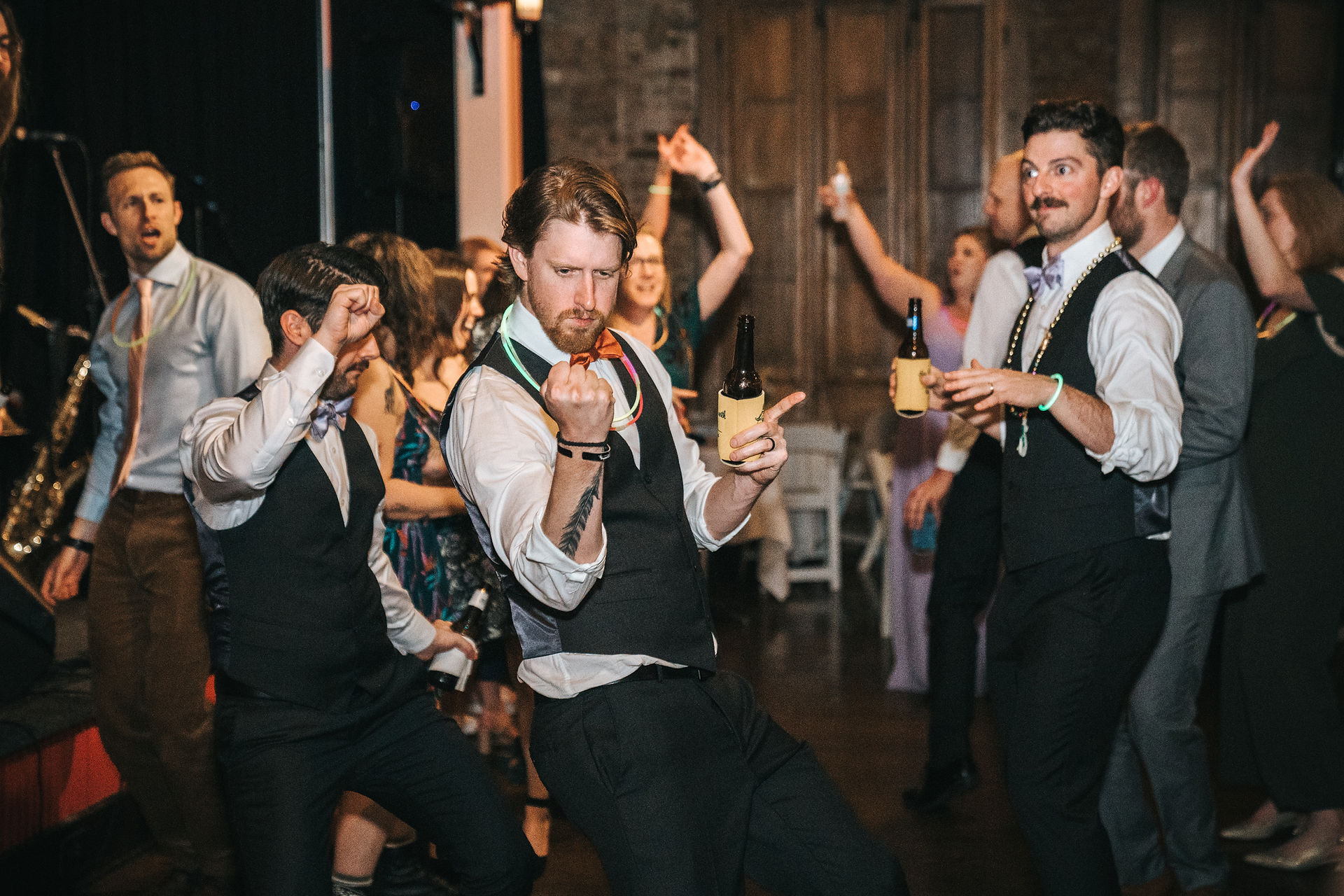
In New Orleans, a reception-style event is often the norm. A New Orleans style reception usually means stations and passed hors d’oeuvres instead of assigned seats and multiple plated courses. Guests mingle, move, dance, eat at their own pace, and experience a range of local dishes throughout the evening. It’s social, lively, and very reflective of how this city celebrates.
If you’ve always imagined a formal, multi-course seated dinner, that’s still possible—but it may limit your venue choices, impact your guest count, or increase your catering budget. It’s really about knowing your options and understanding that here, “traditional” might look a little different than what you’re used to.
When couples are open to a New Orleans style reception, they often find it creates a more relaxed, interactive atmosphere. Guests can jump onto the dance floor, grab a bite, hit the dance floor again, and never feel tied to a single chair all night. A planner who specializes in local weddings can walk you through the pros and cons of each format and help you decide what fits your priorities, your budget, and your guests’ experience.
Skipping a Local Planner or Coordinator
All of these nuances—the time of year, the weather, hurricane season, Mardi Gras and festival season, neighborhood quirks, venue limitations, second line parade permits, and reception style options—share one common thread: they’re so much easier to navigate with someone local in your corner.
Out-of-town couples sometimes assume that hiring a New Orleans-based planner or coordinator is an extra expense they can skip, especially if they’re organized or have planned events before. But New Orleans weddings are their own category. A local planner doesn’t just manage timelines and vendor calls; we anticipate city-specific challenges you may never have thought of and solve them long before they land on your plate.
That local insight can:
- Save you money by steering you away from poor fits or hidden costs
- Protect your guest experience with realistic timing, transportation, and logistics
- Prevent stressful last-minute changes due to weather, parades, or street closures
- Ensure your second line parades, permits, and traditions are handled correctly
- Allow you to actually enjoy being engaged instead of acting as a full-time project manager
Whether you live down the street or across the country, partnering with someone who plans New Orleans weddings day in and day out means you get the magic of the city without the avoidable headaches.

New Orleans is an unforgettable place to get married, but it’s also a city with its own rhythm, rules, and traditions. When out-of-town couples treat it like any other destination, they can run into frustrating surprises—sweltering summer ceremonies, unplanned festival conflicts, noisy French Quarter streets, and venues that don’t match their expectations.
When you plan with New Orleans in mind—from choosing the right time of year and weather contingency plans, to respecting Mardi Gras and festival season, to embracing local neighborhoods and a New Orleans style reception—the city opens up to you. Your second line parade becomes a highlight, not a headache. Your venue feels like a perfect fit. Your guests leave saying it was the best wedding they’ve ever attended.
And with a local planner or coordinator guiding you through each decision, you’re free to focus on what matters most: celebrating your love story in a city that knows how to celebrate better than almost anywhere else in the world.


Comments